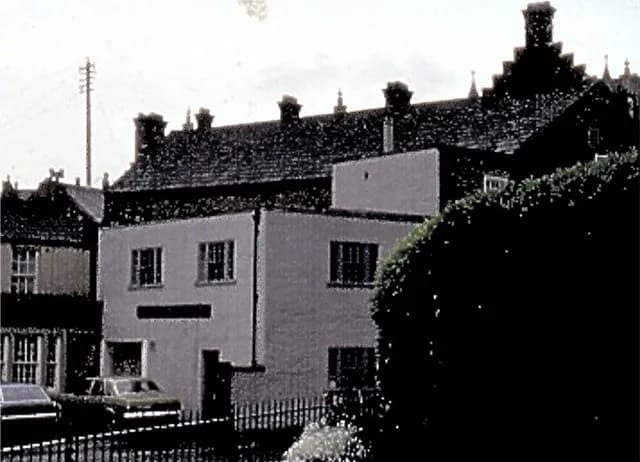
The elegant Georgian facades of Richmond's Newbiggin and Frenchgate owe their existence to a rugged industry in the surrounding dales. Lead mining in Arkengarthdale and Swaledale generated the wealth that transformed this medieval wool town into one of North Yorkshire's most architecturally distinctive market towns.
Roman Roots and Medieval Records
Lead extraction in the Richmond area has remarkably deep roots. Archaeological evidence includes a Roman lead ingot stamped with the name of Emperor Hadrian, discovered at Hurst to the east of Arkengarthdale. The first written records date to 1219 in the Grinton area, and by 1285 a "lord's mine" in New Forest and Arkengarthdale was generating a recorded profit of £4 per year.
The Boom of the CB Company
The industry reached its peak between the late 17th and early 19th centuries, dominated by the CB (Charles Bathurst) Mining Company from 1656 until its final collapse in 1911. The Bathurst lease of 1655, at £3 10s, marked the beginning of organised large-scale extraction. By 1739 and 1740, the Grinton Smelt Mill alone was producing more than 100 tonnes of refined lead annually.
The 1851 census recorded 254 lead miners living in Arkengarthdale out of a total population of 1,283. A further 42 residents worked in smelting, transport, and mine construction. Employment figures from 1831 show that 285 adult males in the dale worked as miners at that time.
From Ore to Architecture
It was this torrent of wealth that reshaped Richmond itself. The town's prosperity as a medieval wool centre was greatly amplified by the burgeoning lead trade in nearby Arkengarthdale, and it is from this period that its most celebrated Georgian architecture originates. The elegant terraces of Newbiggin and Frenchgate stand as the most visible legacy of mining profits, whilst Swale House on Frenchgate, built around 1750, dates squarely from this era of prosperity.
Perhaps the most striking cultural monument is the Georgian Theatre Royal, constructed in 1788 at the height of the lead boom. It remains Britain's oldest working theatre in its original form and is Grade I listed. Its construction during this period of exceptional local wealth is no coincidence; the building embodies the cultural ambitions that industrial profits made possible.
The Smelting Heart of the Dales
While Richmond collected the architectural rewards, the heavy industrial labour took place in the surrounding moorland. Grinton Smelt Mill, now a Grade II* listed scheduled monument, is regarded as the best-preserved lead mining and smelting site in the Yorkshire Dales. Its 980-foot flue climbs to Sharrow Hill, and the site preserves the waterwheel system that once powered the refining process.
Other significant workings included the Faggergill Mine, active from 1521 and connected to Moulds Level by a six-mile underground tunnel. The Old Gang Levels linked to Sir Frances Mine in Gunnerside Gill. Archaeological remains across the moors include bell pits, hushes, and a 3,600-foot chimney flue from a smelting mill, still visible on the landscape today.
Price Collapse and Mass Emigration
The industry's decline was as dramatic as its rise. Lead prices stood at £33 per ton in 1801 but had collapsed to £13 10s by 1831. A depression between 1829 and 1833 triggered population decline as miners sought work in America, Derbyshire, and County Durham. Arkengarthdale's population fell from 1,529 in 1811 to just 761 by 1891.
The closures came in waves. The New Mill at Arkengarthdale shut in 1883, and Grinton Mill closed in 1886, though some sources indicate it was refurbished and worked until 1893. The CB Mining Company finally collapsed in 1911 amid a further lead price slump, and the last recorded working of the Faggergill levels ended in 1912. By 1914, the industry that had built Richmond's Georgian splendour was effectively finished.
What Remains
Today, the connection between Richmond's refined streetscape and the harsh moorland industry that funded it is easy to overlook. Yet the physical evidence survives in both town and dale. The Swaledale Museum in Reeth displays the tools the lead miners used, offering visitors direct contact with the implements of this vanished trade. In 1989, Swaledale and Arkengarthdale were designated the Barns and Walls Conservation Area; at that time, it was the largest conservation area in the United Kingdom.
Richmond's Georgian elegance, from the Theatre Royal to the terraces of Frenchgate, stands as enduring proof that this was never simply a market town. It was, for nearly two centuries, the urban face of one of England's most productive lead fields.
What Is Confirmed: The direct link between lead mining wealth and Richmond's Georgian architecture is documented, as are dates of construction for the Georgian Theatre Royal (1788) and Swale House (c.1750). Population and price figures from the 19th century are sourced from census and economic records.
What Is Unclear: Specific attribution of individual Georgian buildings to named mine owners or companies was not documented in the sources consulted. Comprehensive total production tonnage across all centuries remains unavailable.